
01 · Situation
More orders. Same shop. Fewer hands.
The business was growing fast. At the same time, it lost two of its key material handling people.
Quoted lead times of 8 to 10 weeks had stretched past 11. Over the year, only 65 of 301 jobs shipped on time. Leadership asked three simple questions: what’s creating the challenges, why, and how do we fix them?
The year before · each dot is one job
02 · Problem
The material was there. Nobody could find it.
We walked the floor, the yard, and the purchasing desk, and talked with people at every level. A pattern showed up fast...
- Anyone could pull material, so it was often taken from one job for another without being recorded
- Stock locations were unlabeled and mixed, with raw material and WIP scattered across the plant
- Inventory counts lagged, so the MRP system was planning purchases from bad numbers
- There was no staging area, so the floor scrambled for material the week a job was due
- Excess and obsolete stock was taking up valuable space
- One overseas supplier held up hardware for production
None of this was a people problem. The system hadn’t grown with the business.
03 · Action
A plan their own team could run.
The scope was clear from the start: we diagnose and design, and their team owns the execution. So every recommendation came with the tools to carry it out.
- Material handlers move material. One clear rule to protect inventory accuracy and keep the floor building.
- Nothing moves without a transaction. Every move recorded, so the system matched what was really on the shelf.
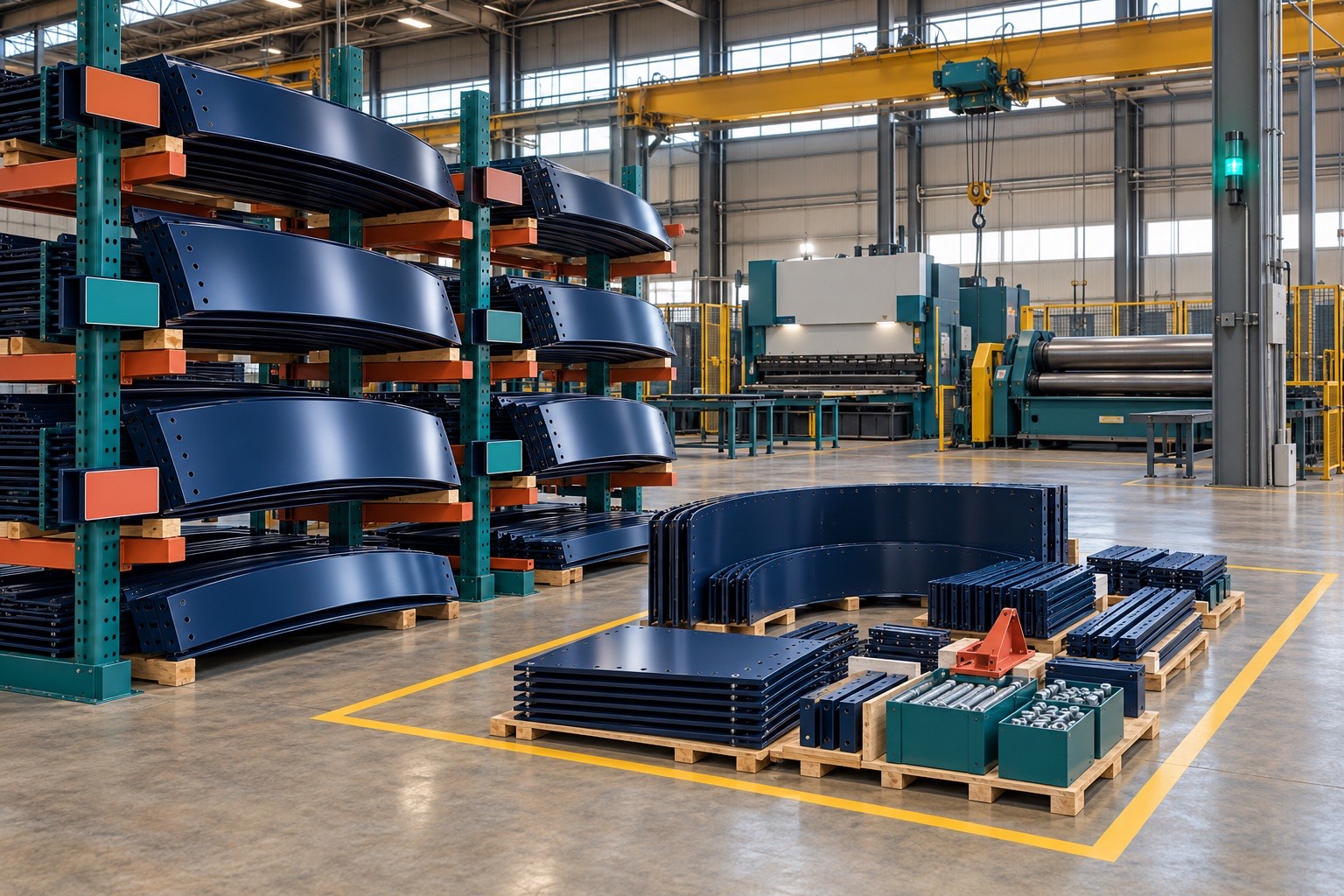
- Labeled locations and better racks. A plan to reorganize the warehouse and yard, with a home for every part, large or small.
- Stage next week’s jobs this week. A staging area and process to gather material ahead of time, so production stops chasing parts.
- Clean up and communicate. An excess-stock policy, timely cycle counts, and a daily huddle to align the floor and management.
04 · Result
Same people. Same equipment. More shipped on time.
Their team took the plan and put it to work. Based on our analysis and execution plan, confirmed with the client afterward, on-time delivery improved about 50% and production capacity grew about 30%, without adding headcount or buying new equipment.
Then came the best signal of all: they called us back. With the shop running better, leadership turned to growth, and asked us to design the layout for its expanding Houston-area plant. We planned it around traffic flow, short distances between steps, and room for future equipment, then supported the setup. That layout was projected to add about 30% more production capacity on its own, separate from the supply chain gains.
We didn’t need to stay to make it stick. Their team owned the change, and the results were theirs.
The capacity was already in the building. We helped them find it.